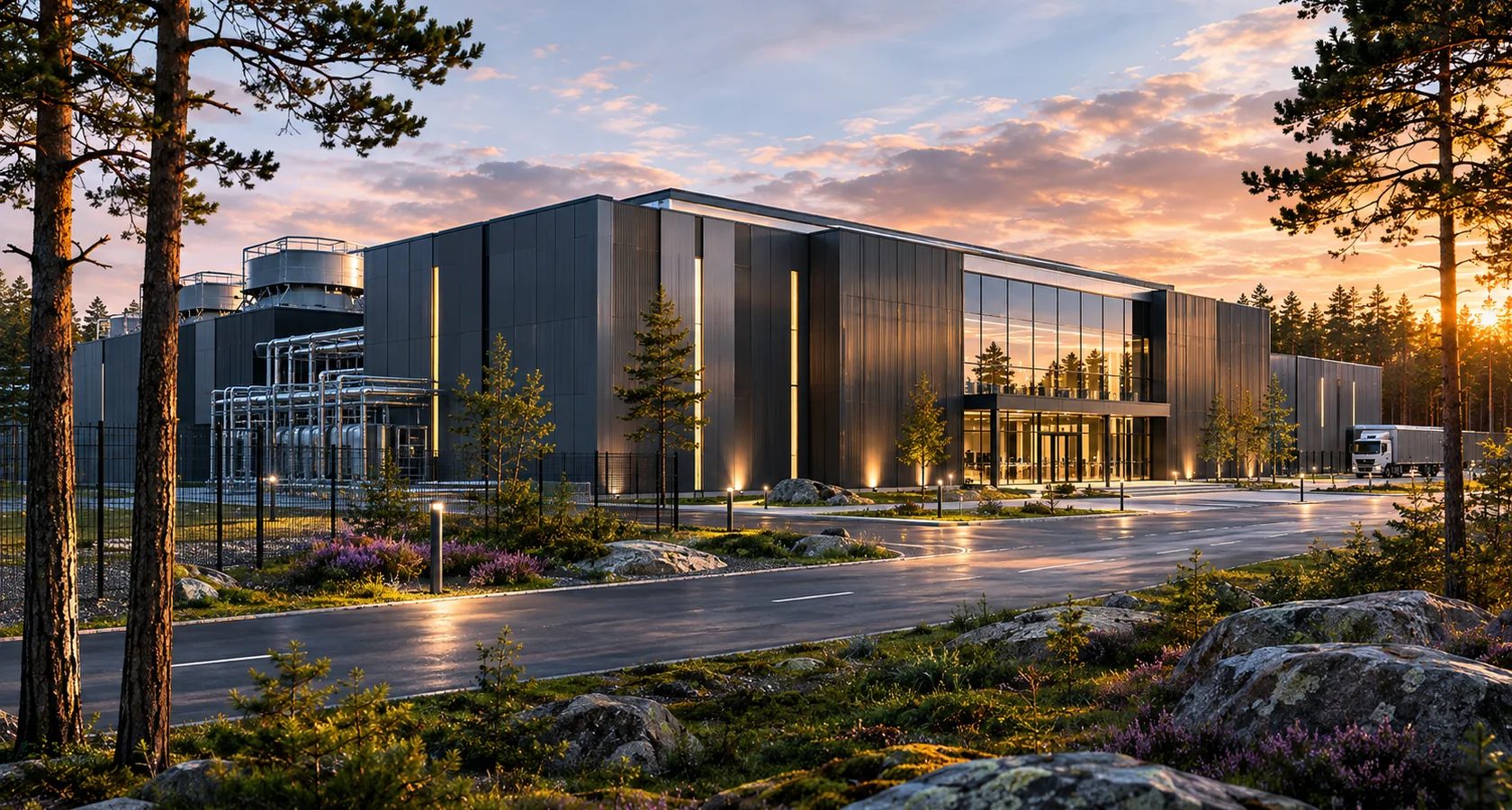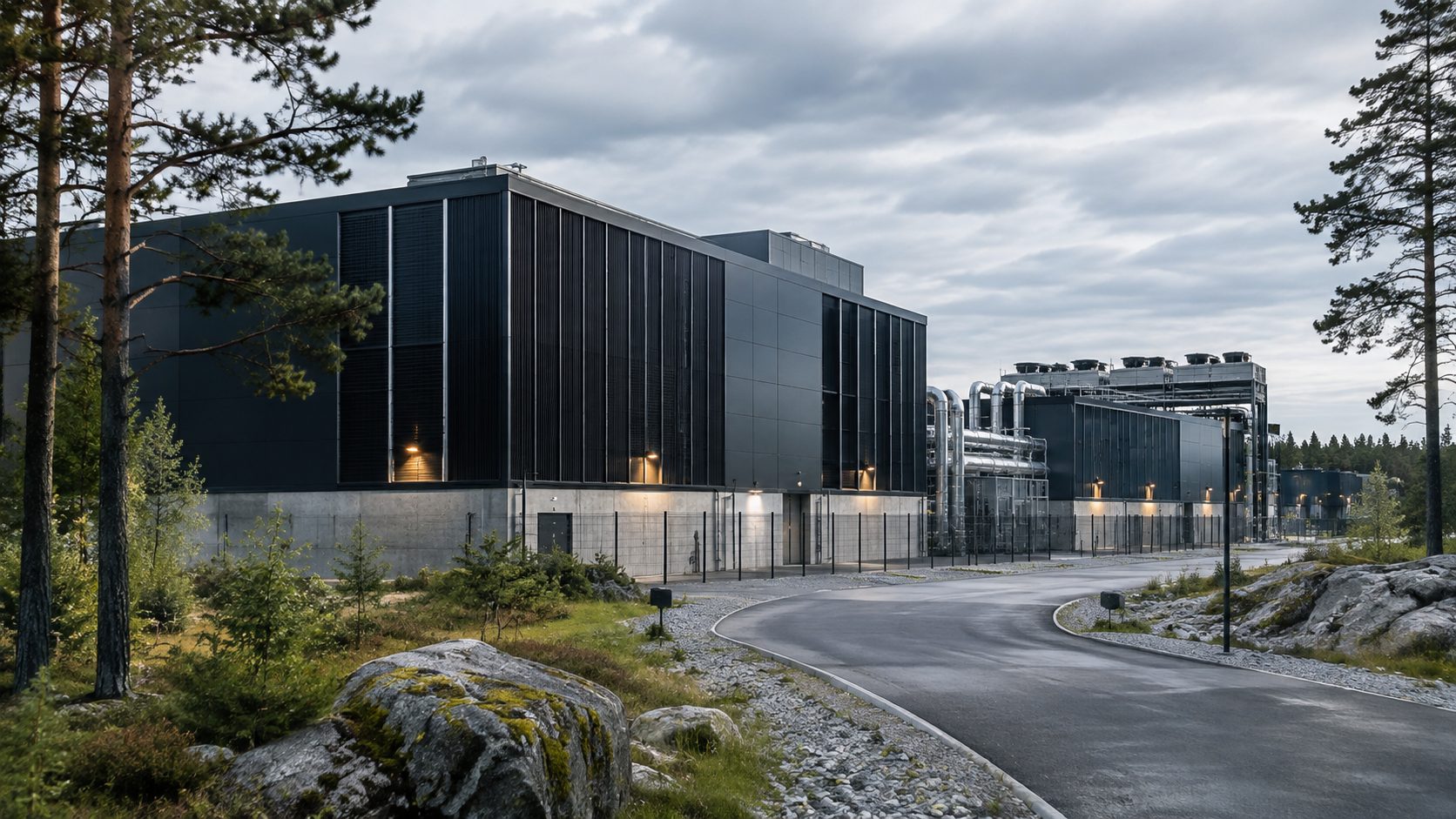
What the development involves
The latest generations of AI servers are no longer cooled with air. Liquid is delivered directly to the processors through cold plates, and a coolant distribution unit (CDU) separates the server loop from the facility's cooling system.
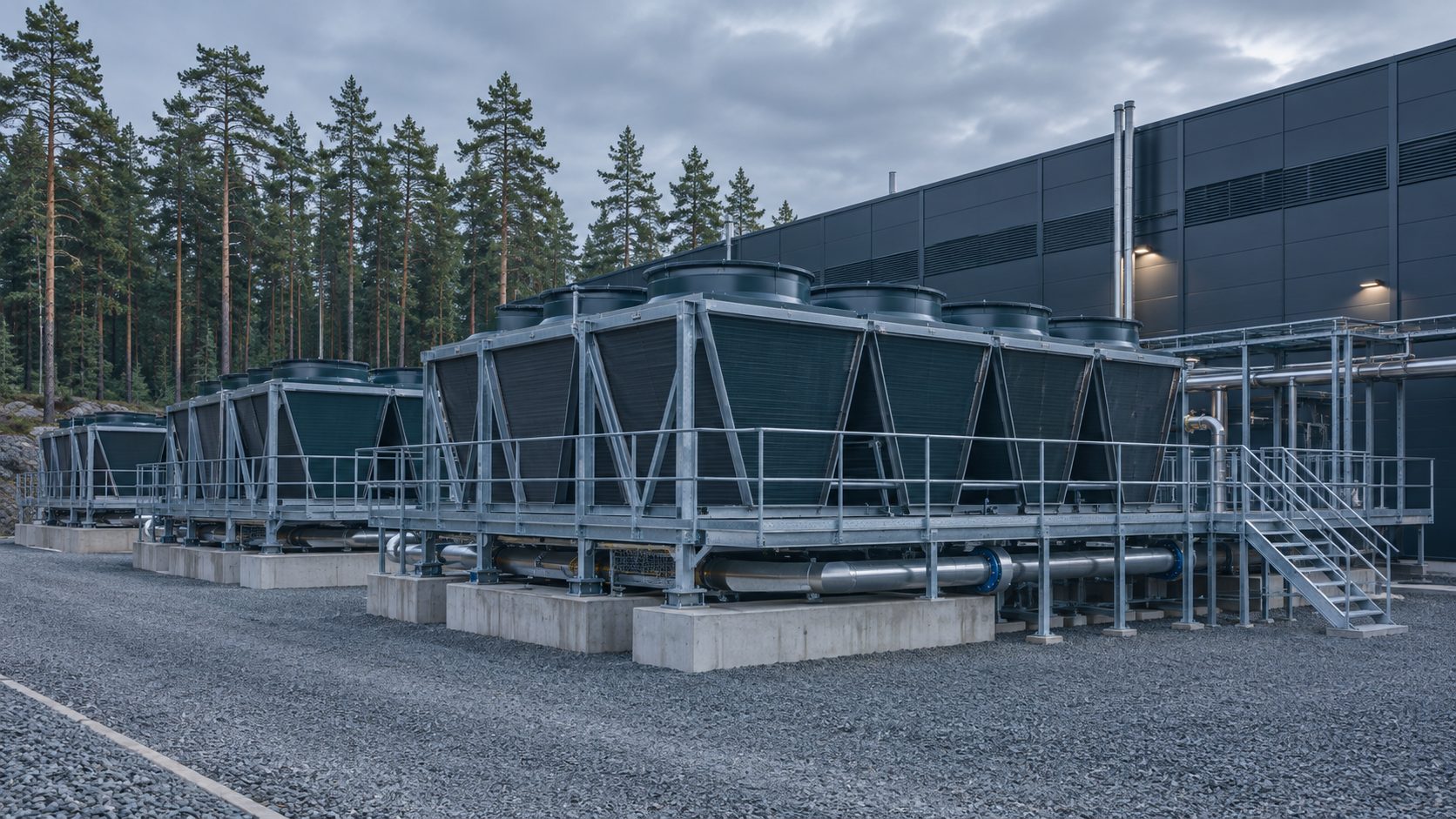
The industry organization ASHRAE classifies liquid-cooled facilities according to the maximum permitted facility water supply temperature. Class W45 means that the facility can operate without chillers (ASHRAE). NVIDIA states that its Vera Rubin platform handles a 45 °C inlet temperature and is fully liquid-cooled, making it possible to cool with dry coolers, that is, with outdoor air and without evaporating water (NVIDIA, June 21, 2026). The technology is commercially available, but operational data from large facilities is still limited.
What benefits are documented
The most thorough comparison is a life cycle assessment from Microsoft, published in Nature in April 2025. It shows that, compared with air cooling, cold plates and immersion cooling reduce energy demand by 15–20%, greenhouse gas emissions by 15–21% and blue water consumption by 31–52%, with the entire chain from chip to grid as the system boundary (Microsoft Research).
NVIDIA's claims of near-zero cooling water are vendor statements and apply only to cooling water. Lower electricity use for cooling is also not the same as lower total electricity use, since IT equipment accounts for the largest share.
What it could mean in Sweden
With low outdoor temperatures for much of the year, dry coolers can handle cooling almost all the time. Warmer return water is also more valuable for district heating, as heat pumps need less electricity to raise the temperature.
What needs to be investigated
How many hours per year a given site can meet W45 without supplementary cooling. Space requirements and noise from dry coolers. How the remaining air-cooled load is handled. The fact that requirements differ between IT generations, so the facility is not locked into a single one.