Studies and simulations
Scientific results that show what is possible but have not yet been tested in operation.
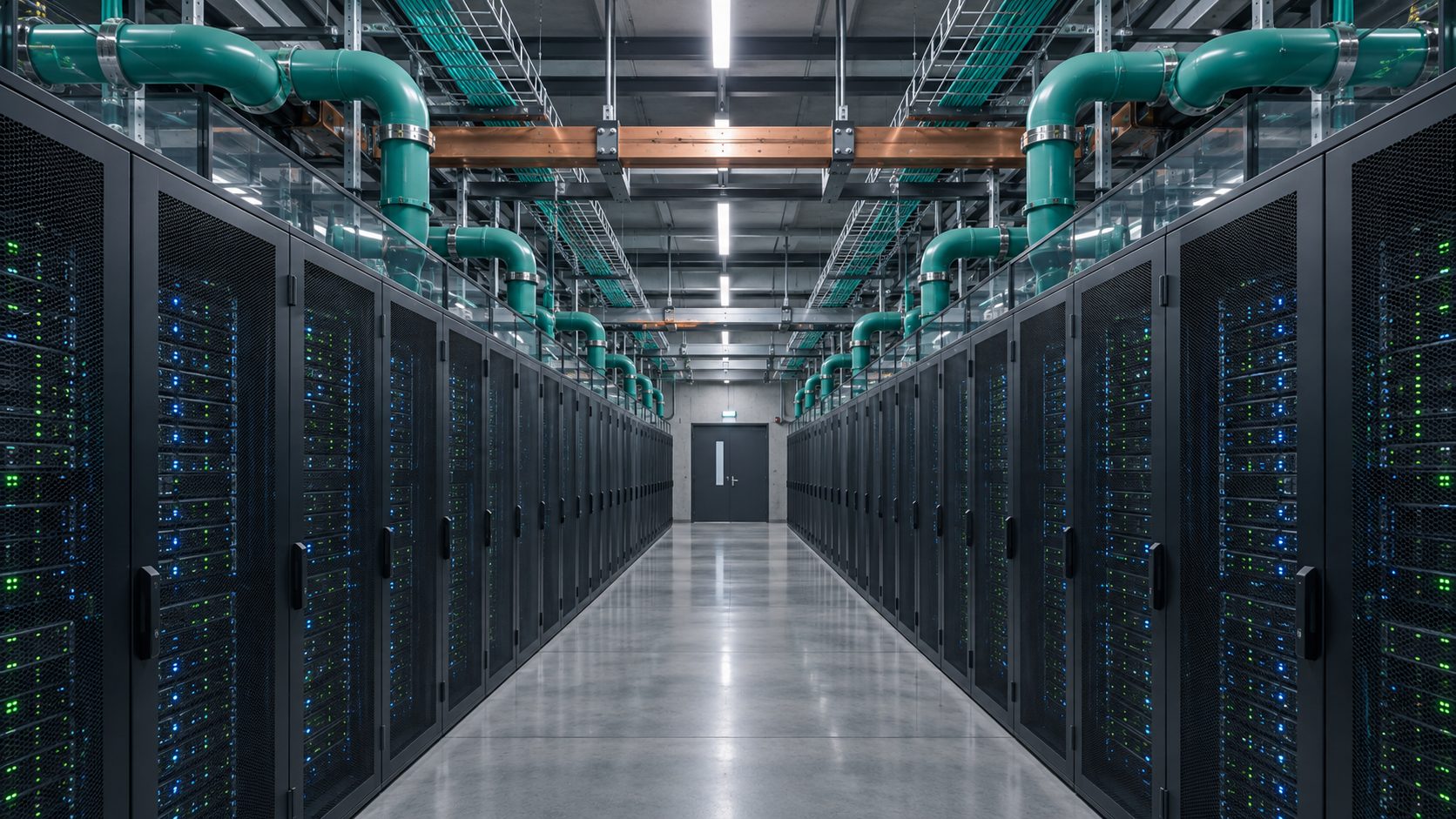
Data centers are changing fast. Higher power per rack, warmer cooling water, direct current and closer interaction with the grid are changing how new facilities should be designed. Here we collect analyses of international developments and explain what we are evaluating for European projects.
Every article states its sources, dates and technology maturity. We clearly distinguish between what is proven in operation, what are vendor claims and what is still research.
AI racks of 100 kW and above can no longer be cooled with air. Cold plates and coolant distribution units are becoming the baseline design.
Read the insight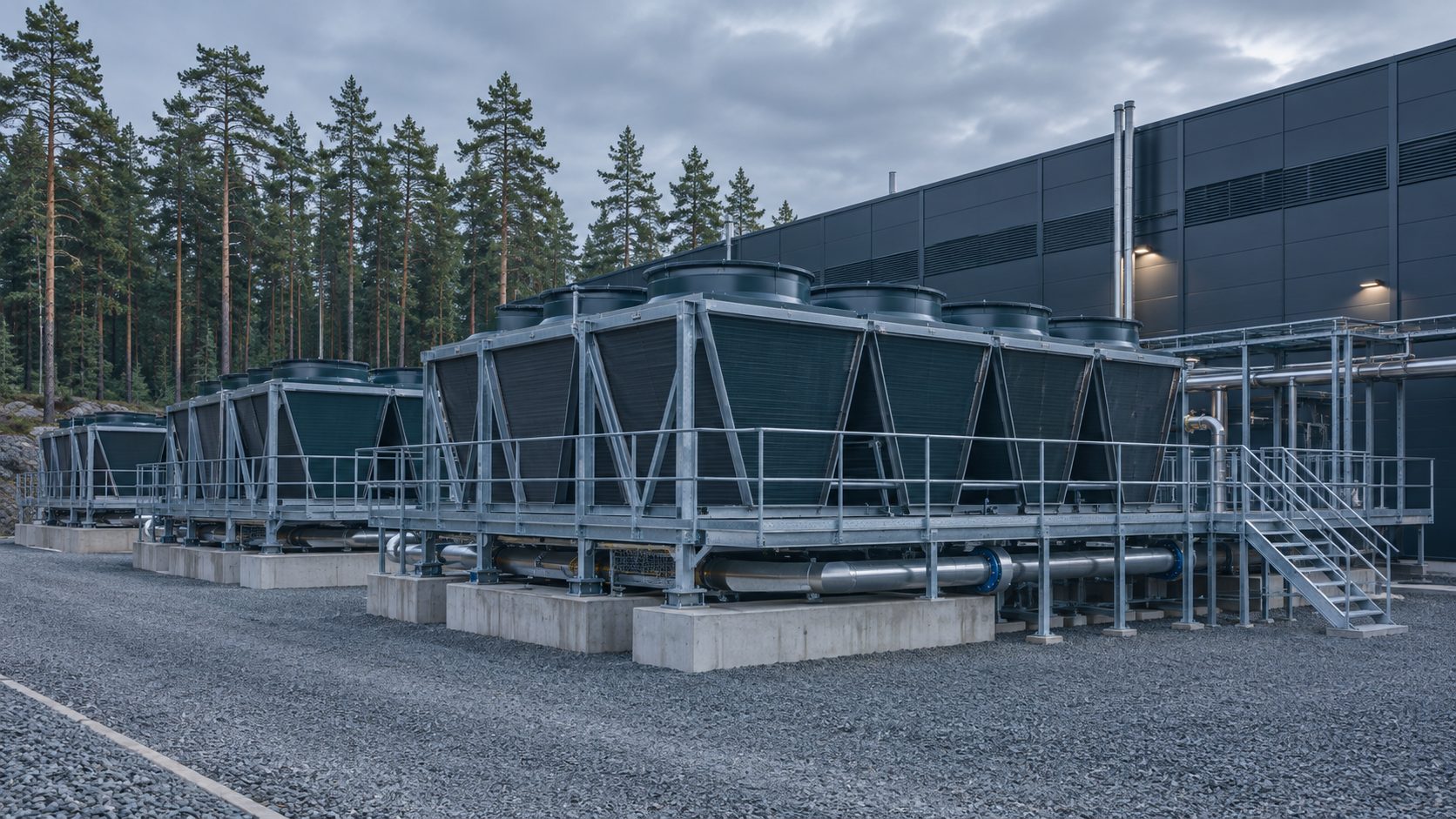
New AI servers can be cooled with liquid at 45 °C, opening the way for data centers without chillers.
Read the insight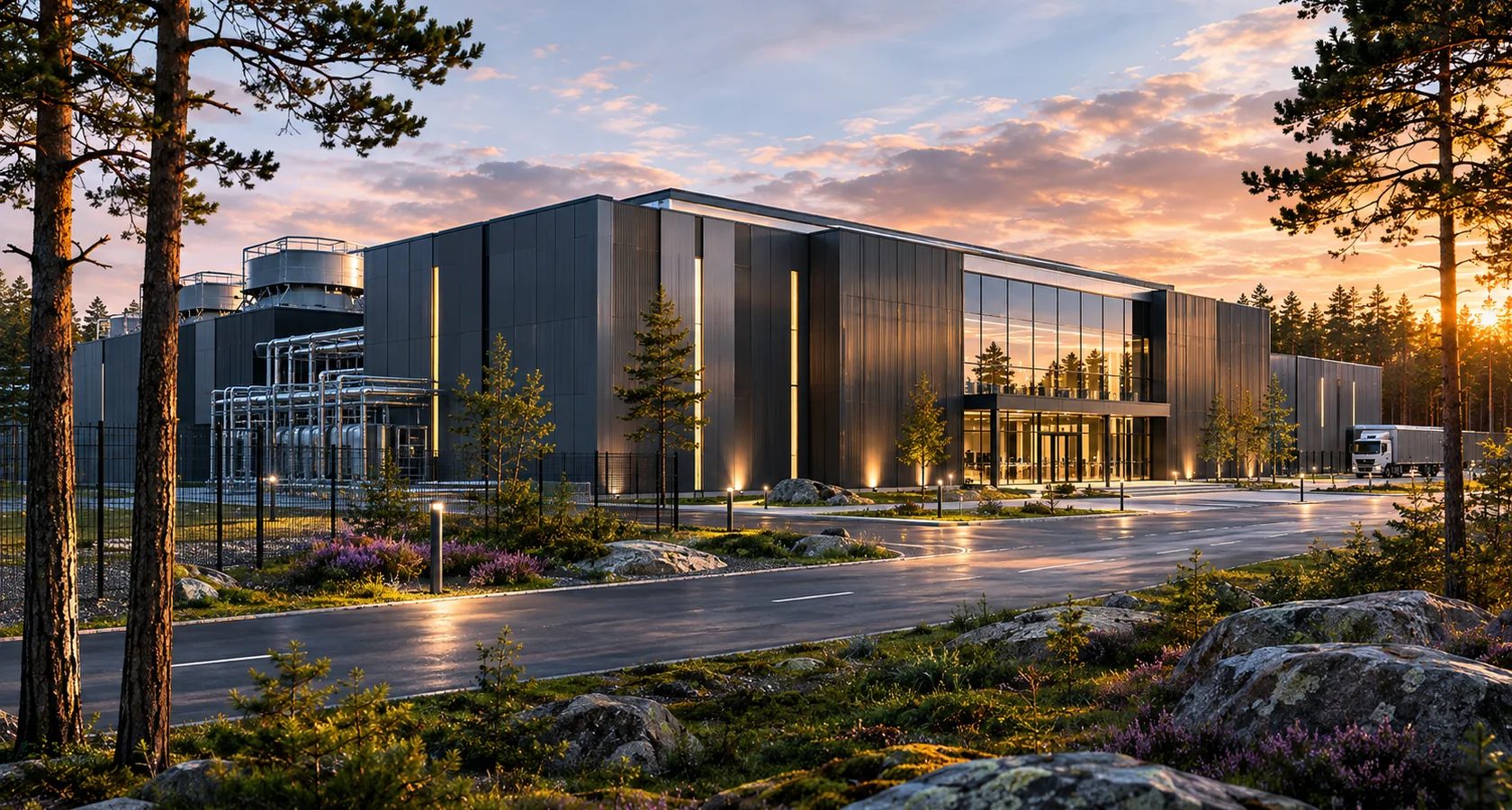
Microsoft is building new data centers where cooling water does not evaporate. Water is saved, but electricity demand increases.
Read the insight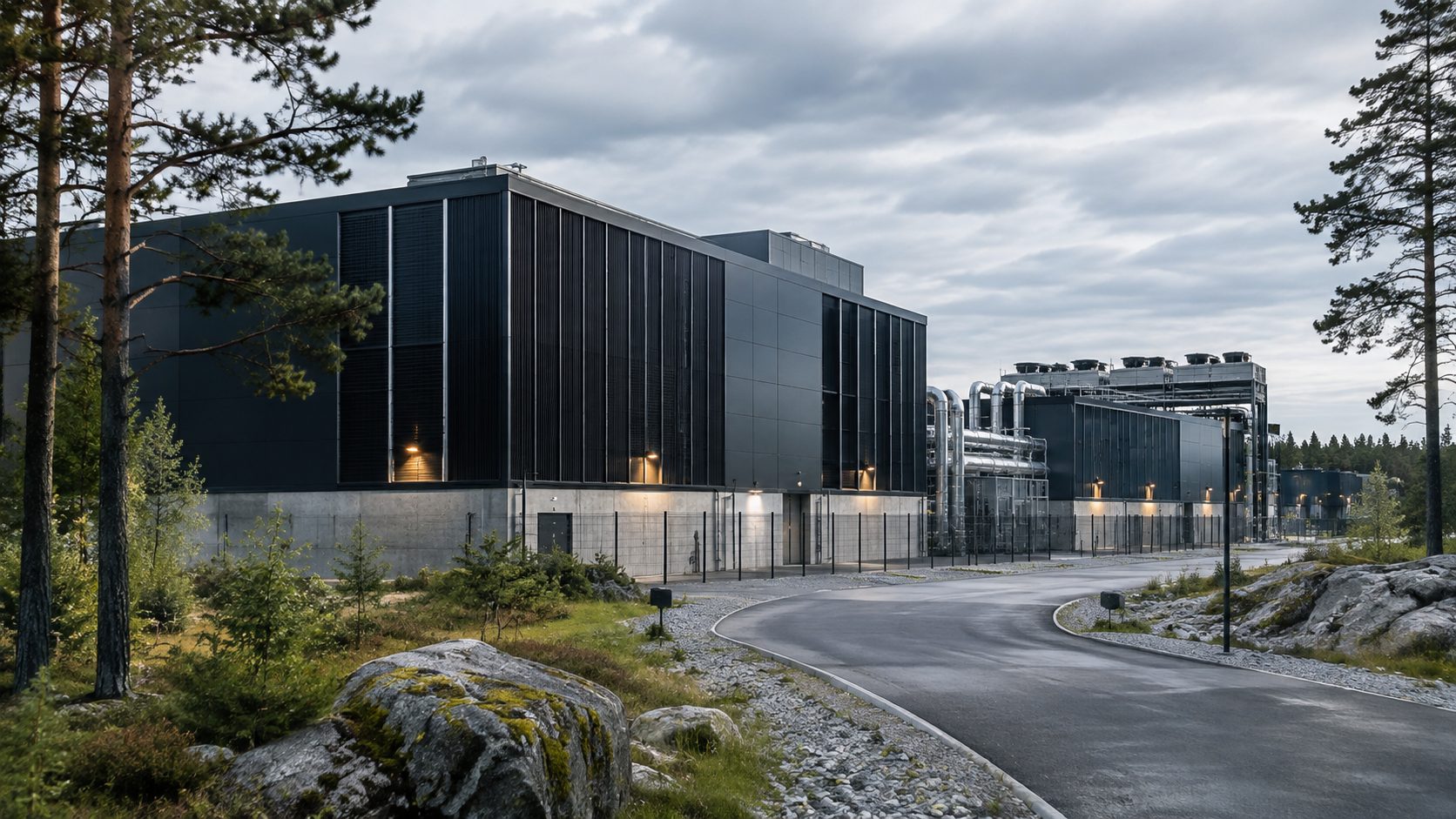
Several Nordic data centers already deliver heat to district heating networks. Their experience shows both opportunities and limitations.
Read the insightIn Finland and Denmark, new data centers are being planned together with energy companies. Heat delivery becomes part of the business case.
Read the insightWhere district heating is unavailable or demand is low in summer, the heat can go to local users.
Read the insightChilled water and thermal storage is increasingly used for peak shaving, not just as backup.
Read the insight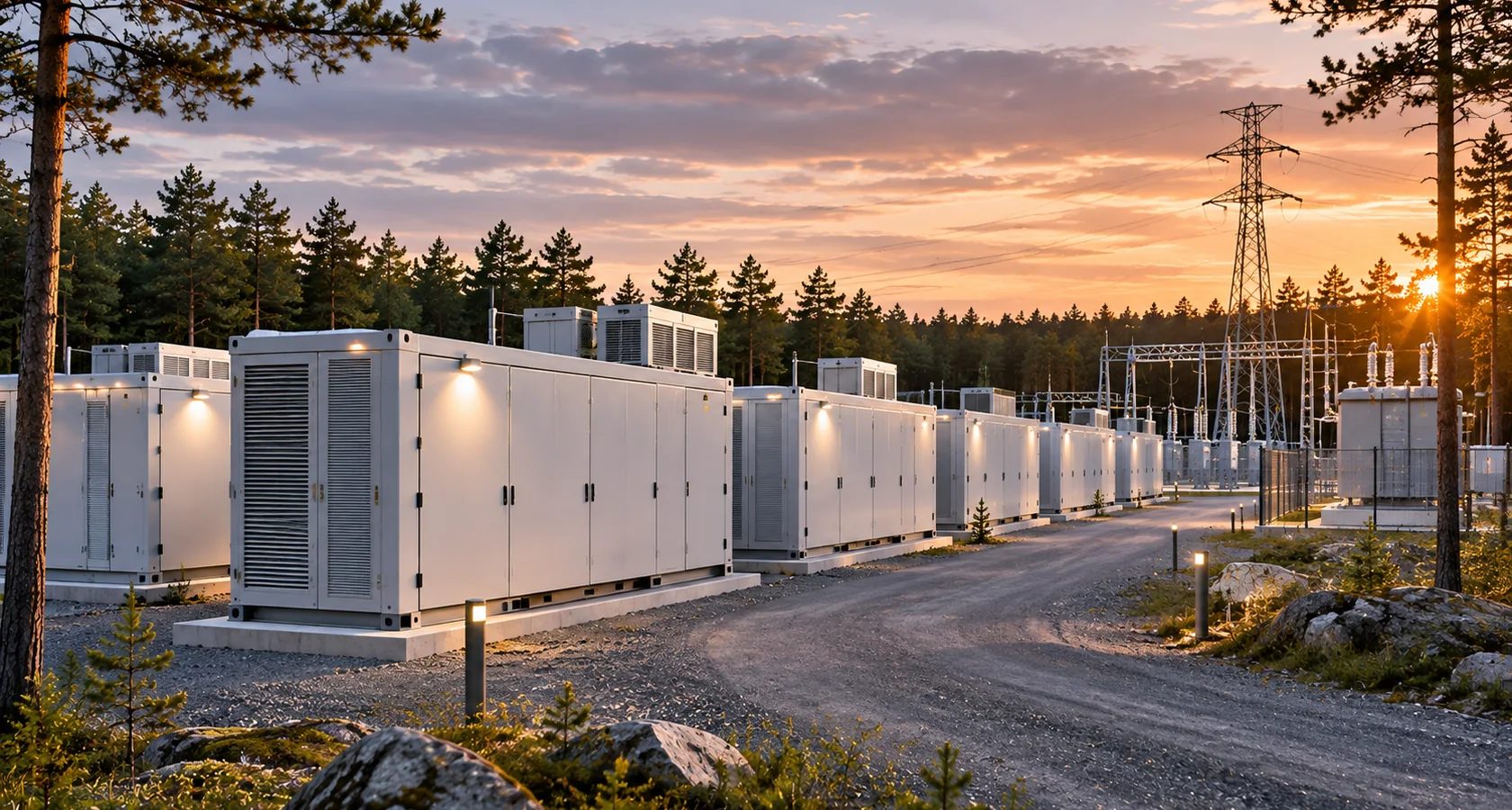
Large AI training jobs cause rapid power fluctuations. We are investigating how the facility can smooth them toward the grid.
Read the insight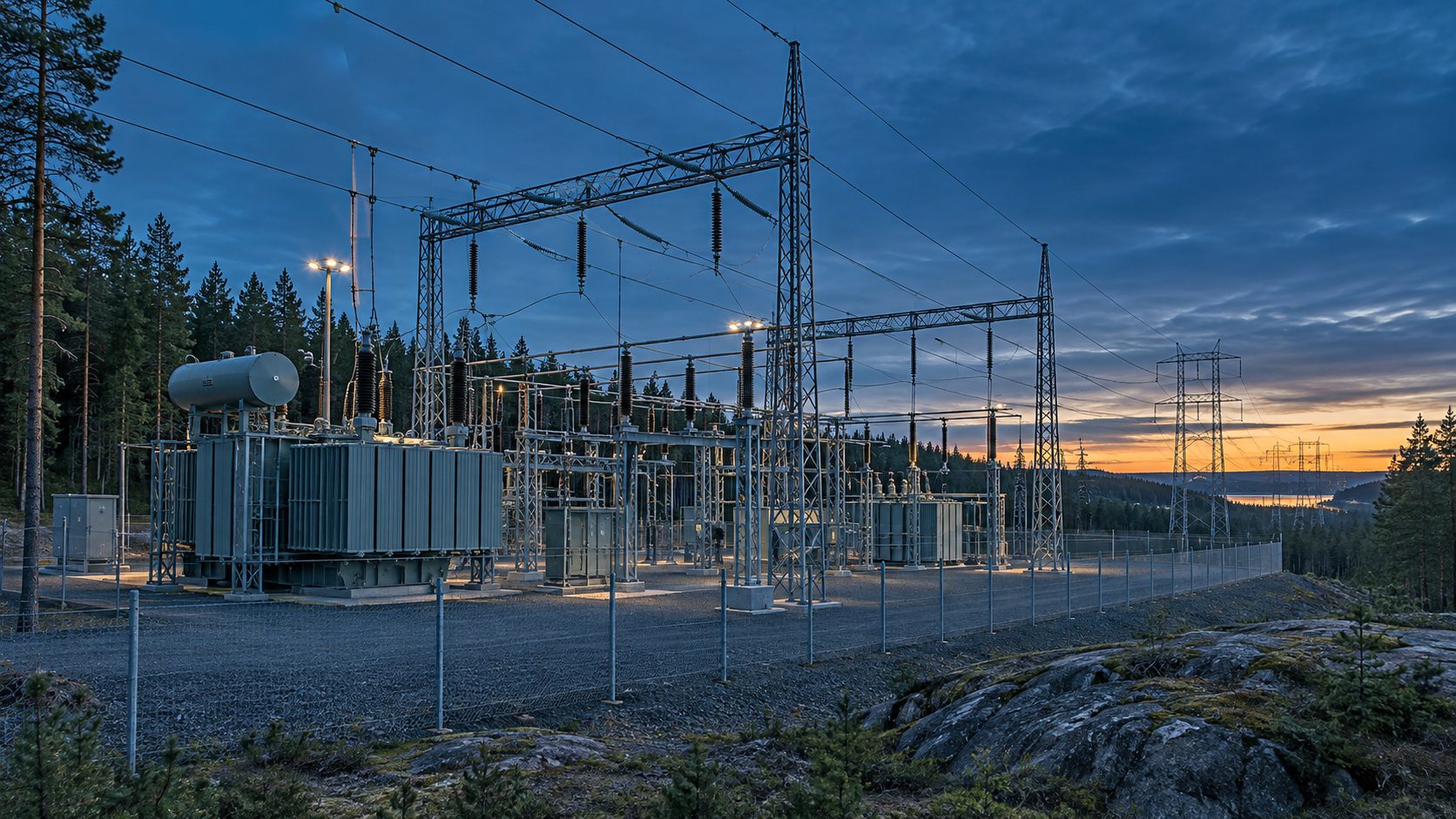
Solutions are being tested internationally in which data centers temporarily reduce their power draw in exchange for faster grid connection.
Read the insightSvenska kraftnät is studying agreements in which capacity can be allocated earlier, provided that power draw can be curtailed.
Read the insight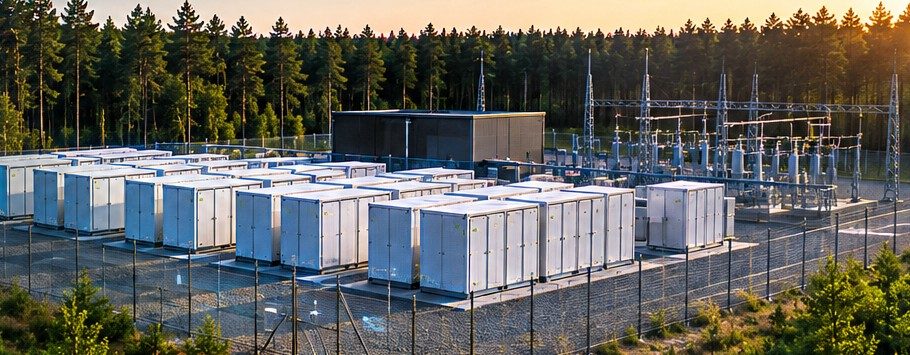
UPS and battery systems can sell ancillary services to the grid without losing their backup function. We are investigating how the two can be combined.
Read the insight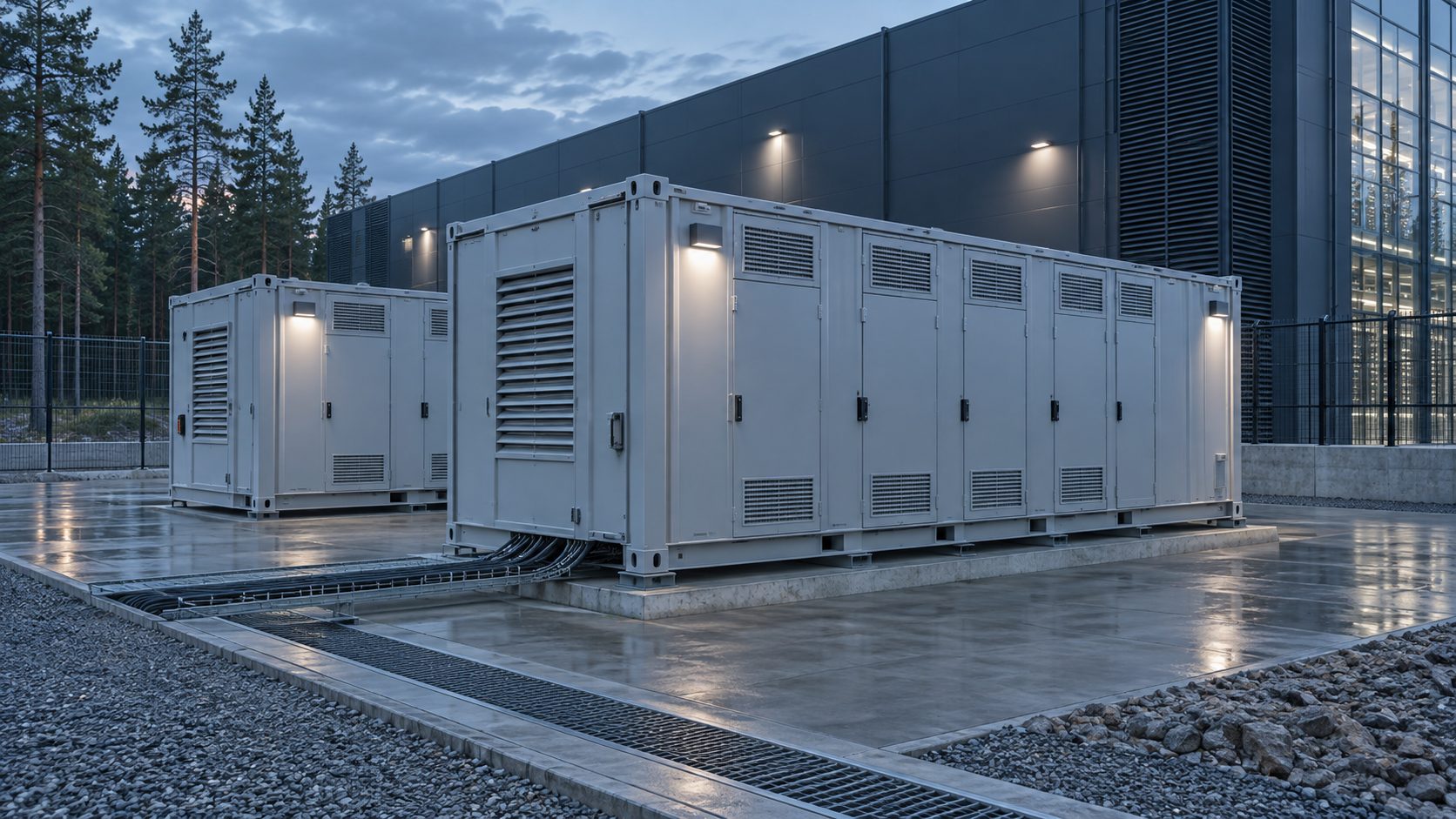
Several major suppliers are moving toward higher-voltage direct current. We are investigating how facilities should be prepared.
Read the insight
New transformers convert medium voltage directly to direct current and take up less space.
Read the insightHydrogen and fuel cells are being tested as backup power. For Swedish projects, HVO and batteries may be closer at hand.
Read the insightServers are submerged in a dielectric liquid. The technology is commercial but still a niche.
Read the insightTwo-phase cooling is efficient but often relies on PFAS fluids, whose future is uncertain.
Read the insightIn the lab, Microsoft has etched cooling channels directly into the chip. The technology is several years away from commercial use.
Read the insightPhysically accurate models of power, cooling and IT can be used as early as the design phase.
Read the insightFactory-built power and cooling modules can shorten construction time. We are investigating how they fit our concepts.
Read the insightData centers with cross-laminated timber structures have already been built in Sweden and the US. This area lies entirely within the developer's responsibility.
Read the insightWe describe each technology according to how far it has actually come, so that investors, operators and energy companies can assess it on the same basis.
Scientific results that show what is possible but have not yet been tested in operation.
Limited tests in existing facilities, often at small scale.
Products on the market, where the figures often come from the supplier.
Operating facilities with reported results, period and basis of comparison.
We welcome a dialogue on heat, flexibility and new technical solutions for data centers in Europe. Together, we can test what creates real benefit, for the facility and for its surroundings.
Contact us